Words of warning

From The Whig Interpretation of History, Butterfield's must-read 1931 historiographical essay:

 
[T]he chief aim of the historian is the elucidation of the unlikenesses between past and present . . . It is not for him to stress and magnify the similarities between one age and another, and he is riding after a whole flock of misapprehensions if he goes to hunt for the present in the past.
— Herbert Butterfield
 

Or, in the oft-repeated saw of L.P. Hartley, "The past is a foreign country; they do things differently there." For an example of the "flock of misapprehensions" a present-minded investigator can run into, see my Historical Movie Monday post on Kingdom of Heaven.

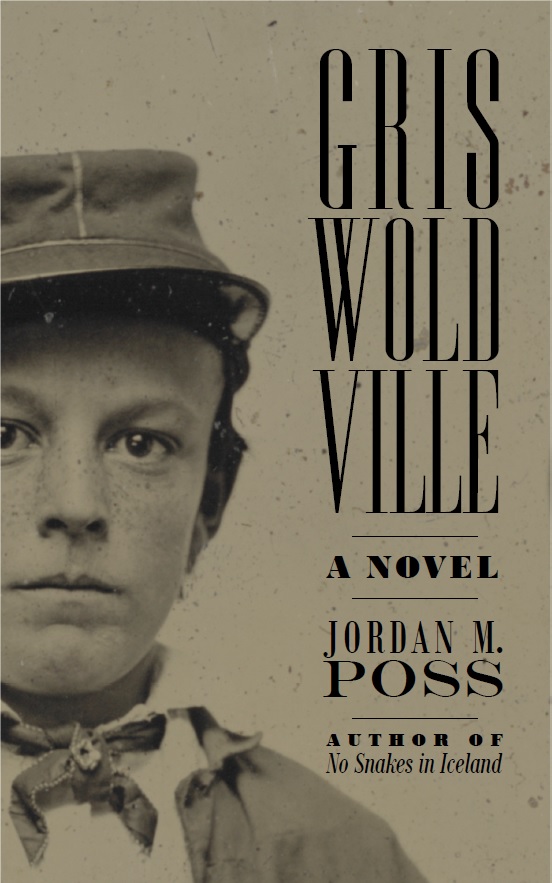
Presenting: the cover of Griswoldville

griswoldville cover 2.jpg

This summer has proven unexpectedly busy. If you listened to my guest appearance on Impolitic Podcast last week, you'll remember that Historical Movie Monday has taken a bit of a hiatus. It will return, but each post is time consuming to research and write and in addition I'm teaching summer classes for the first time in four years, spending the weekends hustling back and forth on various family vacations, and—not insignificantly—I've been working hard to complete revisions on my latest novel.

And the revisions have been going well! So today I'm pleased to present the cover of my soon to be released novel Griswoldville

The story unfolds over the course of the Civil War, as a young boy and his family slowly adjust to the absences of fathers and uncles, the pinch of inflation and government requisition, and finally service in the militia. The description of the novel from the back cover: 

Madison Co., Georgia, 1864—14-year old Georgie Wax has spent the three years since his father left for the war looking after the family farm. WIth his mother and young brothers, Georgie and his grandfather Lafayette "Fate" Eschenbach have brought in the crops every fall, slaughtered the hogs every winter, and kept the farm running as the faraway war stretches on longer and longer and his father seems ever farther and farther away.

But when the enemy reaches their own state, Georgie and his grandfather are called up to the militia to protect Georgia against the invaders. Drilled mercilessly, mocked for lack of experience, and put to work at manual labor, Georgie finds war isn't the adventure he imagined it to be. Only with Atlanta fallen and the enemy on the move will Georgie,  Fate, and their fellow Georgia militiamen find a chance to prove themselves and save their homes from destruction—at a railside factory town called Griswoldville.

The novel should be available before the end of summer. I'm pretty excited about this one, and I hope y'all will be, too. Stay tuned for more announcements! 

A good visit with Impolitic Podcast

Last week I was honored to be invited onto my old classmate Paul Matzko's Impolitic Podcast. Paul's show offers up "friendly arguments" between a libertarian (himself) and a socialist (his co-host, Sean). Paul asked me (a conservative) to substitute for Sean this week and we had a fun, freewheeling conversation about my books, historical fiction, World War II as "the Good War," Charles Portis, conspiracism, the Babylon Bee, and the soft censorship of the internet age. 

You can listen by subscribing to Impolitic on iTunes, clicking through to the Impolitic blog, or listening via Stitcher below. Enjoy, and thanks again, Paul!

Uproot evil in the fields you know

medieval plow.jpg

Alan Jacobs, a scholar and writer I particularly admire, has an interesting post on Tolkien and the possibility—nay, inevitability—of healing in his works. In discussing the way that "all victories over evil are contingent and limited and temporary . . . and the forgetfulness of all the races of Middle Earth tends to reinforce those limits," Jacobs quotes Gandalf from near the end of The Lord of the Rings

 
Other evils there are that may come; for Sauron is himself but a servant or emissary. Yet it is not our part to master all the tides of the world, but to do what is in us for the succour of those years wherein we are set, uprooting the evil in the fields that we know, so that those who live after may have clean earth to till. What weather they shall have is not ours to rule.
— Gandalf in The Return of the King
 

This is a frank, humble assessment of what people can do about evil. This has been on my mind a lot recently, both for longstanding reasons of my own and as I've been working over a post on the resilience of Marxism as an ideology despite its body count. Even beyond Marxism or leftism generally, people of all political persuasions tend to take concrete political or legal problems and abstract and universalize them immediately—as step one of the debate. All problems therefore become existential problems. All mistakes or disagreements become signs of fatal bad faith. All problems become problems that threaten the very fabric of the universe. You don't have to look far to find examples.

Gandalf's words here also happen to harmonize with a theme I've been mulling over for a work-in-progress: a novel about guilt and original sin, "a story with no good guy" as I've described it to a friend. What do to about evil—not just "systemic" evil, the activist concern du jour, or evil as it exists in the whole world, but evil in my own life? That's uncomfortably close. But a humble recognition that we can't solve all problems is the first step to solving some of them. Rather than aiming high, at unachievable universalist goals, find an evil in your neighborhood, something you can actually do something about, and face it. Or, as Admiral McRaven and Jordan Peterson have put it recently, "Make your bed" and "Clean your room."

Finally, also harmonizing with Gandalf, is this challenge from St. Paul that has goaded and bothered me since I rediscovered it last fall:

 
Make it your ambition to lead a quiet life: You should mind your own business and work with your hands, just as we told you, so that your daily life may win the respect of outsiders and so that you will not be dependent on anybody.
— I Thessalonians 4:11-12
 

Jacobs concludes his post by reflecting on how "tricky" Gandalf's vision is: "neither . . . succumb to despair (like Denethor) nor indulge the presumptuous delusion that one’s victories can be everlasting, but rather . . . live, simply, in hope." If there's a more necessary countercultural message today than "lead a quiet life," "mind your own business," "uproot evil in the fields you know," and "live in hope," I don't know what it is.

Confederate heraldry

Turned this up in a bit of late research for a minor part of Griswoldville.

The novel's protagonist, young Georgie Wax, is consumed with knights and medieval stories and takes a keen interest in heraldry as a result. After being called up to the Georgia militia, he passes hours of boredom trying to create a blazon—or official, formulaic description of a coat of arms—for his unit's battle flag

Here's the flag's original designer, William Porcher Miles, in a letter to General Beauregard in 1861, describing the heraldic principles in his new design:

Actual Confederate battle flag, not the ones you see flapping behind pickup trucks.

Actual Confederate battle flag, not the ones you see flapping behind pickup trucks.

This was my favorite. The three colors of red, white, and blue were preserved in it. It avoided the religious objection about the cross (from the Jews and many Protestant sects), because it did not stand out so conspicuously as if the cross had been placed upright . . . 

Besides, in the form I proposed, the cross was more heraldic than ecclesiastical, it being the 'saltire' of heraldry, and significant of strength and progress (from the Latin salto, to leap). The stars ought always to be white, or argent, because they are then blazoned 'proper' (or natural color). Stars, too, show better on an azure field than any other. Blue stars on a white field would not be handsome or appropriate. The 'white edge' (as I term it) to the blue is partly a necessity to prevent what is called 'false blazoning,' or a solecism in heraldry, viz., blazoning color on color, or metal on metal. It would not do to put a blue cross, therefore, on a red field. Hence the white, being metal argent, is put on the red, and the blue put on the white. The introduction of white between the blue and red, adds also much to the brilliancy of the colors, and brings them out in strong relief.

Blazon, saltire, azure, argent—heraldry relies on a vast, arcane vocabulary of largely French origin in a convoluted and rigid syntax meant to preserve the design of a given coat of arms with the permanence of a molecular formula.

Thus, the flag of England is Argent, a cross gules and the flag of Scotland is Azure, a saltire argent. And these are simple blazons. Entertain yourself sometime with more complicated ones.  

So here, as a special first look at Griswoldville, is what Georgie comes up with:

Gules, a saltire azure charged with thirteen mullets argent. I was unsure how to account for the fimbriations, the white borders of the cross, and occupied myself for hours sometimes in shifting this subordinary back and forth through my primitive blazon.

It's worth pointing out that the commonly repeated bit of lore that the flag's design stems from the St. Andrew's Cross of Scotland, because of the vast sea of Scots-Irish farmers who supposedly formed the backbone of the Confederate Army, doesn't enter into it. Just good, sound artistic principles within a body of established tradition here—with a few politico-religious considerations thrown in.

Miles's concluding paragraph to Beauregard begins with my favorite line in the letter: "But I am boring you with my pet hobby in the matter of the flag." What amateur vexillologist hasn't said some version of this?

Polybius on the value of learning history

The Greek historian Polybius (c. 200-c. 118 BC) on a stele of the 2nd century BC.

The Greek historian Polybius (c. 200-c. 118 BC) on a stele of the 2nd century BC.

 
There are two roads to reformation for mankind—one through misfortunes of their own, the other through those of others: the former is the most unmistakable, the latter the less painful.
— Polybius
 

The most difficult task I undertake as a history instructor is not preparing tests, lecturing, or even grading essays, but convincing my students that history is worth learning for its own sake—gratuitously, regardless of its "practical value." (There's a sinister phrase we're far too used to.) I don't know how well I have succeeded—the students who come out of my classes loving history usually loved it or were at least interested in it when they arrived—but one "practical" application that persuades at least some of them that history is worth studying is the concept of history as memory. 

I introduce this idea at the beginning of every semester with another quotation from the classics, in this case Cicero:

 
Not to know what happened before you were born is to be a child forever. For what is the worth of a man’s life, unless it is interwoven with the memory of ancient things from a greater age?
— Cicero, Orator Ad M. Brutum 120
 

To make this more explicit yet, here's the excerpt from Polybius's Histories above in its full context, in which Polybius explains one of his purposes for writing:

I record these things in the hope of benefiting my readers. There are two roads to reformation for mankind—one through misfortunes of their own, the other through those of others: the former is the most unmistakable, the latter the less painful. One should never therefore voluntarily choose the former, for it makes reformation a matter of great difficulty and danger; but we should always look out for the latter, for thereby we can without hurt to ourselves gain a clear view of the best course to pursue. It is this which forces us to consider that the knowledge gained from the study of true history is the best of all educations for practical life. For it is history, and history alone, which, without involving us in actual danger, will mature our judgment and prepare us to take right views, whatever may be the crisis or the posture of affairs.

I've been horribly burned and injured by things and, if my daughter and son, who haven't lived through anything like that yet, will listen to my stories, they don't have to. In the same way, if you can't find anything else to "get out of" history, realize that you can at least learn from others' mistakes and, with wisdom and judicious application to your own life and circumstances, avoid them. History, rightly studied, is acquired maturity.

A bit more practical, realistic, and—I think—moral and hopeful than the grim pragmatism of Santayana's axiom, which has become a modern cliche: "Those who cannot remember the past are condemned to repeat it."

Solo

The evening of Memorial Day I had the chance to see Solo with a friend of mine. I wasn't clamoring to see it, especially since I had intermittently kept up with news of its disastrous production history, so I went in primarily hoping for a few hours of entertainment and a chance to hang out with a friend. My expectations were low. 

solo-official-poster.jpg

The movie surprised me—I actually enjoyed it. It's not a perfect film by any means, but it's not the mess I would have predicted based on the behind-the-scenes stories picked up by the Hollywood press. In fact, it's a mostly fun romp through the margins—the Outer Rim?—of a familiar mythic world. 

Among the things Solo does well is create the illusion of a shopworn reality, the much-discussed "world building" of internet nerds. The locations feel lived-in, established, as if they could carry on just fine without our visit. This worked well even in minor parts: the woman working in customs on Corellia and the Imperial recruiter both felt like real people with desk jobs and other things to do. There was also a grit to some of the locations that felt welcome, especially after the shiny digital sterility of the prequels. (For all its flaws, Solo is still better than any of those.) I especially liked the muddy dreckworld—which Wookieepedia informs me is Mimban—where Han serves in the Imperial Army. That handful of scenes feels like a glimpse from behind the lines of an actual army at work, and Han's desperation to get out is palpable. 

I also liked the western motifs worked into the visuals and the story. The same way Rogue One unpacked and isolated the war movie elements of the original films, Solo pays homage to the western with gambling in dangerous saloons, remote and desolate landscapes, a train-top robbery by a team of bandits, and even the iconic spaghetti western shot of a hand dangling ready by a holster. The film could have done with a little more of this, I think, but I enjoyed it and it meshed surprisingly well with the heist elements of the plot.

The acting is mostly good as well. Woody Harrelson, adding his subtle Texan attitude to the mix, was very good, and Donald Glover's young, pompous Lando was entertaining. Paul Bettany, who was only brought in for the massive reshoots under new director Ron Howard, was good as the villain despite not having much to work with in the way of character. 

Finally, it was nice to see Chewbacca in a pretty prominent role, and his chemistry with Han was the best thing about Han in the film. Chewie even got a bit of a dramatic arc involving the sad fate of his people, who the Empire had relocated from their homes as forced labor—Stalin style. The sight of other Wookiees late in the film was unexpectedly moving.

All of these elements made Solo enjoyable. I was entertained. I liked it. But this was in spite of some evident flaws that I have to point out. I'll just list some:

  • Some of the other performances were just passable. Emilia Clarke's Qi'ra comes to mind. She worked well enough with Han but they didn't have enough chemistry to get me invested in the fate of their relationship. 
  • Related: dramatic irony is a problem—we all know Han is single and on the prowl by the time of the originals.
  • The cinematography, especially through the middle sections of the films, is ugly. Bright, hazy backgrounds leave the foreground actors stranded in murk and shadow, especially in any scene with windows. Strange choices, especially since DP Bradford Young did such good work setting mood and atmosphere in Arrival.
  • L3, the SJD (Social Justice Droid), was intensely annoying. Imagine a woke Jar Jar Binks who is up on his activist hashtags.
  • I couldn't for a moment accept Alden Ehrenreich as a young Harrison Ford. Ehrenreich, who was so good as singing cowboy Hobie Doyle in Hail, Caesar! was miscast here. 

This last point is the wound at the center of the film. Ehrenreich, who supposedly required remedial acting lessons for Howard's reshoots (an exaggeration according to him), is clearly doing his best, but he's just wrong for the part. I didn't believe he was the same Han Solo we've seen before, because I couldn't. I'd be curious to see what another frontrunner for the part, Ansel Elgort, would have done with it.

Those things aside, I still want to emphasize how much I enjoyed Solo. By the end of the first act, as Han and Qi'ra race to escape their home planet, I had bought in. It wasn't without reservation, and the film's flaws still stuck out, but I enjoyed it enough that I was glad to overlook those and take the movie on its own terms. With two "A Star Wars Story" films out now—the first of which I consider a success and this one an interesting if unnecessary and insubstantial bit of backstory—I'm interested to see where future installments go. 

Memorial Day postscript

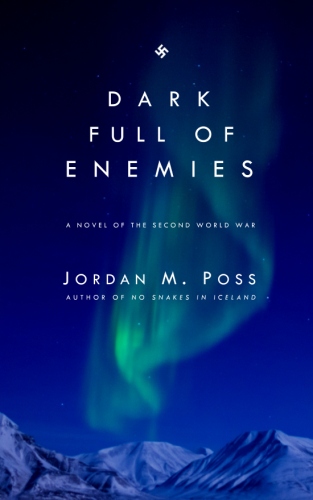
Thanks to everyone who picked up a discounted Kindle copy of Dark Full of Enemies over the weekend! I appreciate my readers and hope you all enjoy the book!

Memorial Day Kindle Countdown

BookCoverImage.jpg

For Memorial Day weekend, my World War II adventure Dark Full of Enemies is on Kindle Countdown at Amazon! Today through Monday the Kindle edition is only 99¢. 

Dark Full of Enemies is the story of a team of Allied commandos sent into the Arctic night of Norway in December 1943. Tasked with destroying a Nazi-controlled hydroelectric dam, the team leader, Marine Captain Joe McKay, must confront the Germans, mysteriously uncooperative Resistance contacts, the darkness and unforgiving weather, and his own past as he struggles to complete his mission. 

Readers have praised Dark Full of Enemies as "an awesome read," "a must read for any and all book lovers everywhere," and "an Alistair MacLean-style, World War 2 commando mission story" that "is simple to the point of poetry." 

Read more about the book, more reader praise, and find links to order at the novel's page here, or visit the Kindle edition directly here to order it while it's discounted. 

Hope you all have a great Memorial Day weekend!

Unknown Soldiers

Last week I reviewed the Finnish film Talvisota (The Winter War) for Historical Movie Monday. At the time I had just started reading a novel taking place a year and a half after those events: Väinö Linna's Tuntematon sotilas, or Unknown Soldiers in its most recent English translation. I finished it earlier this week. It's one of the best war novels I've ever read.

linna.jpg

Unknown Soldiers follows a company of Finnish machine gunners through the Continuation War, from the beginning in the summer of 1941 to ceasefire in September 1944. The Finns coordinated their invasion of Soviet Russia with the German invasion, Operation Barbarossa, making the Finns ostensible German allies though they were never fully incorporated into the Axis. The goal was to recapture land taken from Finland by the Russians during the Winter War and occupy other territory to be used for postwar bargaining following German victory. 

None of this matters to the characters in Linna's novel. Not really. They know about most of this political background and occasionally discuss it, but their war is earthy, small-scale, and intensely personal. They are less concerned with Hitler's eventual success against Stalin than with how to handle the weight of a machine gun while marching, how to get enough to eat, how to make some extra cash while the war keeps them from home, how to keep out of the way of officers, and how to stay alive.

The novel begins and ends with the war. After a brief introduction to most of the major characters—there is no single "main" character—the machine gun company assembles and boards trucks for the front. They don't know where they're going or why at first, and a brief passage on God's destruction of a patch of forest through a wildfire is the last bit of omniscience we'll get until the very end. We experience the fog of war with the characters, seldom knowing any more than they do and taken by surprise just as often as they are. 

The characters are wonderfully drawn, and have apparently become bywords for particular kinds of people in Finland. Linna ranges up and down the chain of command, giving us moments with everyone from the company commander to new privates who arrive at the front a few years in. Lieutenant Lammio, a potential martinet but otherwise harmless, becomes company commander after the respected previous commander is killed just a few days into the war; in his new position, his negative traits come to the fore. Ensign Kariluoto, another officer, is naive and detached and has the novel's only real love story, budding from his infatuation with Sirkka, a hometown girl. There's Hietanen, a bluff, good-humored jokester who is nevertheless painfully shy around women, and Vanhala, a giggler, both of whom sober up over the next three years, especially as they rise to positions of leadership and find themselves tested. Lehto is aloof, a gruff, tough fighter, and Määtä, a short, quiet man, never shirks from hauling his squad's machine gun, quietly earning the respect of every man in the company. Lahtinen is a communist sympathizer who, like most Marxists, annoys his friends by interjecting mindless revolutionary formulae into ordinary smalltalk. Honkajoki is an eccentric trying to build a perpetual motion machine and who carries a bow and arrows. Mäkilä, the company quartermaster, is obsessively stingy with the men's gear: "He kept the shelves in impeccable order," Linna tells us, "stocked with all the finest equipment, unmarred by any worn-out items—which he distributed to the company." 

The novel is also, I should point out, wryly funny.

My two favorite characters were Rokka and Koskela. Antero "Antti" Rokka is an older man—in his early- to mid-thirties—a husband and father, a veteran of the Winter War, and a refugee from Kannas, part of the Finnish territory taken by the Russians. He has the most personal stake in the success of the invasion, and only when it becomes clear, in the last quarter of the book, that he'll never see his old farm again is his chipper, folksy demeanor shaken. He has no time for formalities and routinely offends superiors with a knowing "Lissen here." He is also the best soldier in the company, never shrinking from combat, and, in one famous episode, ambushing and wiping out a platoon of more than fifty Russian soldiers with just his submachine gun. (This incident, far from being a proto-Rambo bit of action, is based on an actual incident in which a soldier named Viljam Pylkäs gunned down over eighty Russians.) By the end of the novel, when he's one of the only major characters left, I really dreaded for his safety.

Koskela, on the other hand, is an officer who achieved his rank through merit, during the Winter War. He's strong, silent ("quiet Koski" is a nickname used a few times throughout), courageous, leads by example, loved by his men—all the qualities of a Greek hero without the arrogance or ostentation. As a leader, he also sets himself apart through the crucial ability to know what matters and what doesn't, an ability Lammio, who tries to court martial Rokka at one point, lacks. When leadership of the company finally devolves onto Koskela at the end of the book, as the Finns retreat from Russia and face encirclement, Koskela acts quickly and decisively and his men follow. It's a really stirring portrait of manhood and leadership.

Linna also has a lot to say about courage, but shows what courage really means in modern war. For every death-defying one-man charge on an enemy bunker by Koskela there are two or three small moments borne of split-second decisions by men forced into a corner: Lahtinen staying behind with a machine gun while his buddies evacuate wounded men, or Hietanen finding almost accidental courage in the face of a Russian tank attack: 

It was as if his entire consciousness had been frozen. It refused to consider the significance of these angry blasts, as if shielding itself from the terror such considerations would induce. Hietanen darted quickly behind the upturned roots.
Just then he heard Rokka's voice yelling, "Now shoot like hell!"
Hietanen was panicked and trembling with anxiety. The urgency ringing in Rokka's cry struck his over-excited consciousness as a warning of some new, unknown danger. Then he realized that the call was intended for the others.
It occurred to him he did not know if the mine was functional or not. He didn't know anything about it except that it was supposed to explode under pressure. It was a little late for sapper training, however. The time was now or never.
A vision of the tank tracks rolling beneath their fenders flashed through his mind. Right there ... right there ... And then he threw. The weight of the mine made aiming next to impossible, and a kind of prayer-like wish flickered through Hietanen's consciousness as he hurled it. . . . Only then did the precariousness of his own position suddenly dawn on him. Would the tree base be enough to protect him from the force of the blast? He sank down behind it, opened his mouth and pressed his hands against his ears.
Two seconds later, it was as if the pressure of the whole world suddenly descended upon him. He didn't experience the explosion as a sound, but rather as a numbing, thudding blast
and then his consciousness went dim.
When it returned, he saw that the vehicle was still, titled slightly to one side. . . . He just lay there, looking back and forth at the tank, then at the men, who were yelling at him, "Yes, Hietanen! Woo-hoo! Bravo, Hietanen!" The praise was all wasted, however; Hietanen couldn't hear a thing.

All the danger, brutality, humor, courage, excitement, dread, horror, irony, and businesslike slogging mirror the war and Finland's role in it. It's excellent.

A Finnish machine gun position overlooking no-man's-land, February 1944. Source: SA-kuva, the Finnish Defense Forces Wartime Photograph Archive.

A Finnish machine gun position overlooking no-man's-land, February 1944. Source: SA-kuva, the Finnish Defense Forces Wartime Photograph Archive.

I could say more about the plot, but the plot doesn't really matter. The war is, for the characters, a string of violent incidents that gradually winnows and thins the ranks, and that's what Linna, who lived through the Continuation War himself, shows us. He presents military life and war unromantically, as ceaselessly hard work with limited resources, work that can turn deadly with no warning. By the end of the war, even evacuation by ambulance isn't safe. The much-ballyhooed "random" deaths of George R.R. Martin's characters have nothing on Unknown Soldiers, and these soldiers' deaths are the more pitiful when they come because we care so much about them.

Unknown Soldiers has a well-deserved place in the pantheon of great war literature. It has the grim, clear-eyed detail of All Quiet on the Western Front and the sense of sheer, exhausting labor of The Naked and the Dead. But the novel Unknown Soldiers reminded me of most was Karl Marlantes's Matterhorn. Like Linna, Marlantes was a veteran of the war he wrote about and based his novel on his own experiences. Like Unknown Soldiers, Matterhorn takes a worm's-eye view of the conflict, bringing the reader into close quarters with a large cast of characters for hundreds of pages. And it's worth the trip.

Closing notes

Linna published his novel in 1954. It was first translated into English as The Unknown Soldier in 1957, and again in 2015 by Liesl Yamaguchi, which is the version I read. I neither speak nor read Finnish, but I understand this new translation is more faithful to the original than the first English version. Yamaguchi undertakes the thankless task of communicating the many local dialects and accents of Finnish, and mostly succeeds; Rokka's woodsy twang, to give one example, is instantly recognizable, though some of the others' slangy talk is distracting.

There have been three film adaptations: in 1955, a Finnish classic that airs every December on Finnish Independence Day; in 1985; and again in 2017, a version shot using natural light that looks strikingly beautiful. The 1955 original is available in its entirety on YouTube. The newest version is not apparently available on DVD or Blu-ray anywhere yet, but here's the trailer and a clip of Rokka's one-man massacre of that Russian platoon.

Tom Wolfe, RIP

Tom Wolfe, journalist, novelist, and gadfly of both professions, died yesterday at the age of 88.

tom wolfe.jpg

I first discovered Wolfe through his fiction. I have no idea where I heard about it or why I started it, but I read The Bonfire of the Vanities as a freshman or sophomore in college. It was a massive novel in tiny print—even tinier in the mass market paperback I had—that I plowed through an hour or two at a time in the university snack shop. As soon as I was finished, I picked up A Man in Full. I read these just in time for I Am Charlotte Simmons to come out, which was one of the first novels I ever bought in hardback.

But this latter I gave up on about halfway through. I could take Wolfe's minute inspection and heightened dramatization of big city, upper class hypocrisy, manipulative identity politics, art world fraud, and even stud farming, but the underbelly of college education hit too close to home. It depressed me. Some of his essays, especially "Hooking Up," a prophetic look at the emerging sexual ethics of 21st century America, depressed me too. Later, as I finished grad school, I returned to Wolfe and read The Right Stuff, which is still one of my favorite books. But, I'm sorry to say, my foray into Charlotte Simmons in the fall of 2004 is the last of Wolfe's fiction that I read.

I wasn't the only one to be put off by Wolfe's work. I chose the word gadfly above for a reason. Wolfe had the ability to make people uncomfortable, an ability by turns enviable, by turns dubious but, I think, necessary. Each of his books provoked outrage from some quarter, whether the precious heights of the modern art world or apologists for latter day university debauchery. I hesitate to call him a journalistic Socrates—it's the kind of comparison I'm sure he could turn on me and make me sound ridiculous—but there was something of Socrates in his way of life: the suit, the ties and pocket squares, a strange man on a laser-guided search for unquestioned assumptions and hidden foolishness. And, of course, Socrates provoked outrage, too.

Controversy aside, Wolfe was unmatched as a writer. Since discovering Bonfire in college, I've revered him. The tone and sheer volume of his prose mesmerized me, brought me into a dreamlike state in which he seemed to telegraph his story directly into my brain, without intervening paper and ink. There was probably a word per page of that book that I had never seen before, but which I understood intuitively from the way he used it. Any writer who wants to see, know, and understand the power of the precisely chosen word would do well to pick up some Wolfe and read. His style, vocabulary, and command of the language were unmatched and will probably remain so for a very, very long time.

RIP