2022 in books

I read a lot of good books in 2022, and I had a hard time narrowing them down in the “best of” categories I typically use for these posts, and once I had done that I still had a lot to say about them. So let me end these introductory remarks here and get you straight into the best fiction, non-fiction, kids’ books, and rereads of my year.

Favorite fiction of the year

This was a fiction-heavy year of reading thanks in no small part to two wonderful series recommended by friends, about which more below. I present the overall favorites in no particular order:

Wait for a Corpse, by Max Murray—A really charming and witty mystery from the early 1950s in which the mystery is not who killed the narrator’s awful Uncle Titus but who is going to. A genuinely romantic will-they-won’t-they love story, a variety of humorous and farcical plot complications, and a dash of small-town political shenanigans round out this fun story. Long out of print and probably hard to find, but worth seeking out.

John Macnab and Sick Heart River, by John Buchan—This year I declared my birth month John Buchan June and read and wrote about as many of his novels as I could. I squeezed eight in, and these two were my favorite new reads. One a high-spirited outdoor heist caper set in the Scottish highlands, the other a moody and contemplative outdoor odyssey through the furthest reaches of the Canadian Rockies, both are excellent, gripping, absorbing reads, albeit in dramatically different ways. You can read my full John Buchan June reviews of John Macnab and Sick Heart River here and here.

Fatherland, by Robert Harris—A Kripo detective in Berlin investigates the murder of an obscure Nazi Party functionary as the city prepares to celebrate Hitler’s 75th birthday—in 1964. I’m not usually one for alternate history, but Fatherland approaches a fantasy world in which the Nazis won World War II through a brilliantly structured mystery-thriller, giving the reader two levels of investigation and discovery that interlock with and complement each other. It’s vividly imagined, plausibly detailed, and briskly written. “I couldn’t put it down” is a hoary cliché, but in this case, for me, it was true.

And the Whole Mountain Burned, by Ray McPadden—A strongly written and hard-hitting novel about two soldiers—one experienced, one green—in the United States’ war in Afghanistan.

Butcher’s Crossing, by John Williams—The story of a buffalo hunt in a remote pass of the Rockies, Butcher’s Crossing balances a gritty, sweaty, bloody plot with intense character drama, pitting the naïve and sentimental New England boy Will Andrews against the Captain Ahab-like Miller, the guide and trigger-man leading the expedition. Beautifully written and gripping. I blogged about Williams’s use of the senses in Butcher’s Crossing here.

The Daughter of Time, by Josephine Tey—A severely injured police inspector tries to solve a 450-year old mystery from his hospital bed. It’s better than it sounds—astonishingly good, in fact. Full review from last month here.

And Then There Were None, by Agatha Christie—The work of Agatha Christie is a weird lacuna in my reading, and until this year the only one of her novels I’d ever read was Murder on the Orient Express way back in high school. I fixed that this fall with one of her other most famous books, And Then There Were None. This review will be short: it’s regarded as a masterpiece for a reason.

The Narrative of Arthur Gordon Pym of Nantucket, by Edgar Allan Poe—Poe’s only novel, Arthur Gordon Pym purports to be the journal/memoirs of a New England youth who stowed away on a ship and got considerably more than he bargained for, including mutiny, shipwreck, cannibalism, ghost ships, and a final voyage into terra incognita, violent encounters with undiscovered peoples, and… something far worse. Poe combines Moby-Dick-style kitchen sink realism, a Robinson Crusoe-style spirit of adventure, and plenty of his own trademark feel for the uncanny and terrifying for an engaging and uniquely thrilling tale. I had only ever heard bad or dismissive comments about Pym up until this time and was very pleasantly surprised by it.

The Passenger, by Cormac McCarthy—Cormac McCarthy’s first novel since The Road sixteen years ago starts as a sort of New Orleans No Country for Old Men in which Bobby Western, the brilliant son of a Manhattan Project physicist who is now a salvage diver, starts his own investigation into the mysterious crash of a private jet in the Mississippi River only for terrible unseen forces to array themselves against him. This storyline is interspersed with that of Bobby’s sister, a child prodigy afflicted with intrusive schizophrenic hallucinations, whom we know from the opening pages eventually hangs herself. But neither storyline goes anywhere, exactly. Long, talky, meandering (none of which are intended as criticisms), The Passenger is as vividly written as any of McCarthy’s other work but clearly has much more going on in it thematically than the straightforward plot elements, and I knew even while reading it that it would stick with me and reward me more later through simply letting it sit in the back of my mind for a while, and that has proven to be the case. But that doesn’t make it a completely satisfying read. So, caveat lector. The companion volume focusing primarily on Bobby’s sister and her institutionalization, Stella Maris, is already out but I haven’t gotten to it yet. We’ll see how this informs and recasts the events of The Passenger in the new year.

Witch Wood, by John Buchan—I read this just a week or so ago, so you can expect a full, thorough treatment this coming John Buchan June, but for the time being let me recommend it as a strongly written, engaging, atmospheric, suspenseful, and genuinely spooky historical novel in which a young minister discovers the existence of a devil-worshiping cult in his seemingly upright Scottish parish. A favorite of CS Lewis, who wrote of it, “for Witch Wood specially I am always grateful; all that devilment sprouting up out of a beginning like Galt’s Annals of the Parish. That's the way to do it.”

Blood Meridian, or: The Evening Redness in the West, by Cormac McCarthy—This was a reread, but it was a special reread for me. This was the first novel by McCarthy that I read as a callow college student more than fifteen years ago, and I was unprepared for it. (I’ve described starting McCarthy’s corpus with Blood Meridian as “jumping into the deep end first.”) But it stuck with me, haunting me, and steadily grew in my regard, and within a year or two I had read almost everything else McCarthy had written up to that point. This year it was finally time to revisit Blood Meridian, and with the intervening years and maturity and experience it was like reading a different novel, or the fulfilment of the novel I struggled with one summer in college—gripping, bleak, and overwhelmingly powerful. So I’m including this reread among my favorite fiction reads of the year, and giving it a stronger recommendation than ever.

Discoveries of the year

Let me here thank my friends Dave Newell and JP Burten (whose novels Red Lory and Liberator y’all should check out) for introducing me to the following two series, of which I read too many volumes to include in the usual “favorites” format above but which I have to acknowledge as highlights of the year:

The Professor Dr von Igelfeld Entertainments, by Alexander McCall Smith—An absolute hoot, these short stories and novellas follow the marvelous philologist Prof Dr Moritz-Maria von Igelfeld, an aristocratic German scholar of the Romance languages and proud author of the seminal 1200-page study Portuguese Irregular Verbs. Von Igelfeld is a brilliant creation, simultaneously pompous and polite, rigid and kindhearted, humorless and eager to please, tone-deaf to social niceties but ostentatiously courtly, jealous of his own honor and childishly naïve. (He does not understand, for instance, why so many other prominent professors have such attractive graduate assistants, or why so many students are so obliging about coed room assignments on what is supposed to be a scholarly reading retreat in the Alps.) This is a charming combination of foibles that consistently lands him in uncomfortable situations ranging from awkward silences to high farce, situations from which he is either too proud or too oblivious to extricate himself. Pure, unalloyed fun.

  • Volumes read: Portuguese Irregular Verbs, The Finer Points of Sausage Dogs, At the Villa of Reduced Circumstances, Unusual Uses for Olive Oil

  • Volumes remaining: Your Inner Hedgehog

The Slough House series, by Mick Herron—An excellent series of spy thrillers featuring the outcasts, losers, and screwups of MI5 who, rather than being fired and creating public embarrassment, are shunted into dead-end jobs at a site called Slough House under the management of the slovenly former “joe” or field operative Jackson Lamb. Each volume is intricately plotted, engagingly and suspensefully written, and—what sets it most apart from the novels the series is most often compared to—funny. I’ve enjoyed these so much that I’ve forced myself to space them out so that I can squeeze in other reading.

  • Volumes read: Slow Horses, Dead Lions, Real Tigers, Spook Street, London Rules, Joe Country

  • Volumes remaining: Slough House, Bad Actors, and Standing by the Wall

Best of the year:

My favorite fiction read of the year is, for the first time in one of these lists, a reread. I had thought that rereading The Road in 2019 was my favorite that year, but it turns out I had misremembered. The novel is James Dickey’s Deliverance.

Deliverance is notorious in my hometown because John Boorman’s film adaptation was shot there and the movie hangs brooding over us like a specter. Plenty of cultures have to live with unflattering stereotypes, but toothless hillbilly sodomites has to be among the worst. Certainly, the “paddle faster, I hear banjos” bumper stickers got old pretty quick.

But as I discovered when I finally read it during grad school, Deliverance the novel is something else entirely—an involving, horrifying, thrilling, deeply and disturbingly beautiful novel with a rich narrative voice and strong, poetic writing.

If you’re familiar with the movie you already know most of the story; the film adapts the novel quite faithfully. But by the nature of its medium, the film has to deal in visuals, actions, and sounds—externals, surfaces. Dickey’s novel is internal, with deep, swift, very cold currents flowing beneath the surface. Its characters, chief among them narrator Ed Gentry, are all psychologically rich, and the seemingly simple actions of the plot—the drive north, the canoe trip, the horrible encounter with the moonshiners, the flight downriver, ambush, killing, and the final lie meant to flood and hide the events of the canoe trip forever—are complicated and intensified by the characterization and by Ed’s transformation from soft suburbanite to killer, a transformation we witness.

Deliverance is a brilliant novel, an intricately crafted prose poem, a haunting evocation of real environments, a thrilling tale of survival, and a weighty morality play concerning sin, guilt, and the thin layer of civilization far too many trust to keep them from the darkness in their own hearts.

Rereading Deliverance after well over a decade of reflecting on it made this the best fictional read of my year. Though it is not for the faint of heart, I strongly recommend it.

After finishing it this summer, I blogged here about John Gardner’s principle of using vivid, concrete detail to create a “fictive dream” in the mind of the reader and used Deliverance as a major example, comparing it to several other favorites from the spring and summer—Blood Meridian, John Macnab, and Sick Heart River. You can read that post here.

Favorite non-fiction of the year

While fiction threatened to take over my reading this year, I plugged away at a number of good works of history, biography, literary study, and cultural commentary. In the best of these those categories overlapped generously. The following handful of favorites are presented, like the fiction, in no particular order:

In the House of Tom Bombadil, by CR Wiley—An insightful and warmly-written literary, philosophical, and theological look at the meaning and significance one of the most perplexing characters in all of Tolkien’s legendarium. Full review from earlier this year here.

Blood and Iron: The Rise and Fall of the German Empire, by Katja Hoyer—A very good short history of the German Empire (1871-1918) with attention to its origins in post-Napoleonic nationalist movements, political intrigue, and military victory; its politics, finances, and imperial ambitions; its culture and key personalities; and, inevitably, its downfall in the catastrophe of the First World War. Well-structured and balanced and highly readable, this is the best book of its kind that I’ve come across.

The Man of the Crowd: Edgar Allan Poe and the City, by Scott Peeples—An engaging and insightful short study of the life of Edgar Allan Poe and the chaotic, striving, rumbustious landscape of antebellum America through the prism of the cities where Poe lived most of his life. Full review from October here.
Poe: A Life Cut Short, by Peter Ackroyd and Edgar Allan Poe: The Fever Called Living, by Paul Collins—Two elegantly written short biographies of Poe that complement each other nicely. Collins’s biography gives extraordinarily good coverage to Poe’s work for such a concise book, and Ackroyd’s gives greater depth to Poe’s tragic personal life. I’d readily recommend either of these to someone looking for an introduction to Poe that cuts through the manifold myths (insanity, drug abuse, etc etc) and fairly represents the man’s life and work. Short Goodreads reviews here and here.

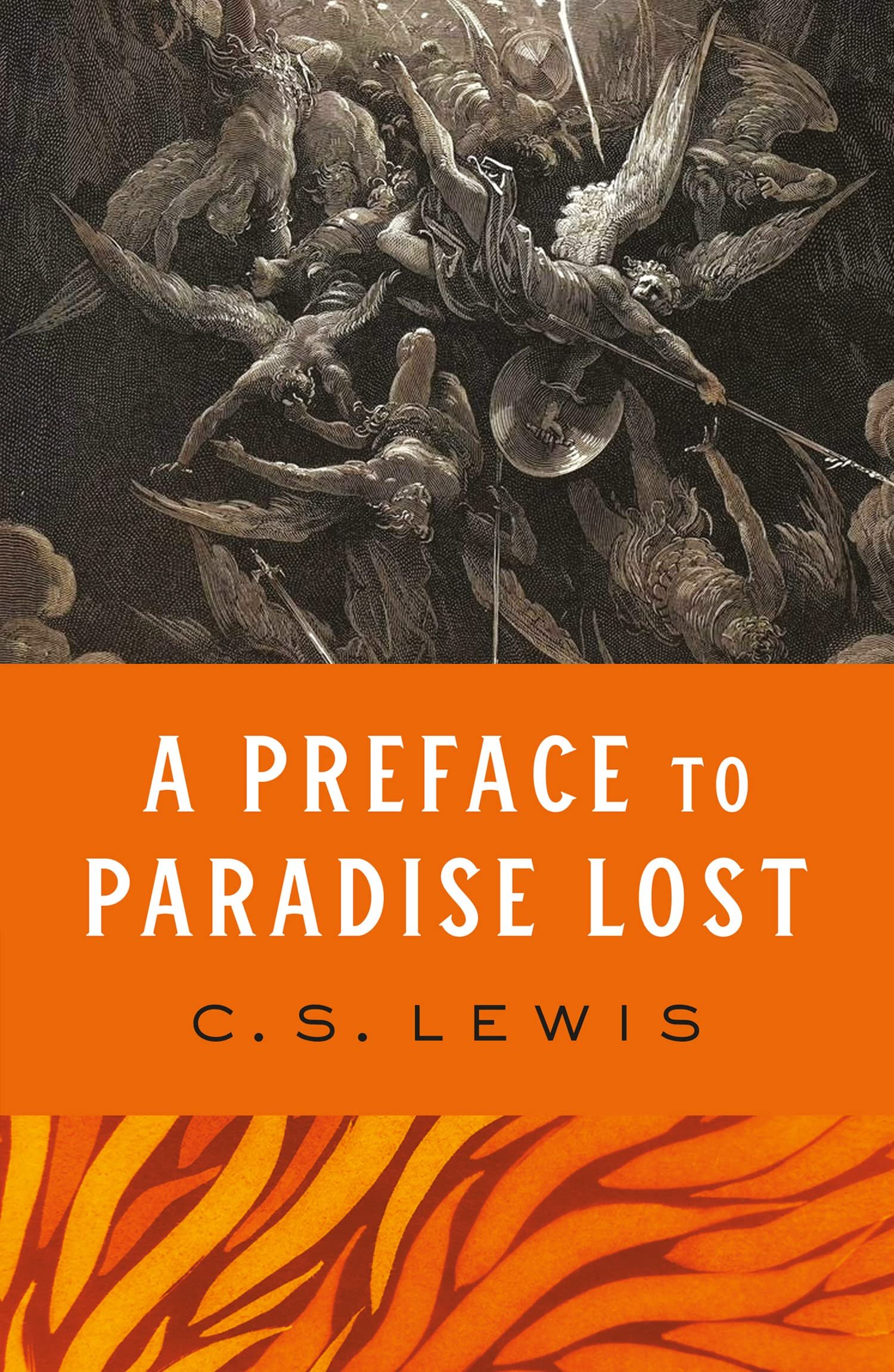
A Preface to Paradise Lost, by CS Lewis—I have tried and failed many times to love Paradise Lost, so I’ll let CS Lewis love it for me. This is an outstanding introduction not only to Milton’s great epic, but to the origins and history of epic poetry generally and to Milton’s place in the story of this genre. Being a fan of epic from Homer to Dante, I most savored the earlier chapters that explain its history and contextualize Milton’s work, but the entire short Preface is an excellent piece of scholarship and worthwhile whether you love Milton or not. (Side note: While I have a very old paperback copy of this book from Oxford UP, I read the nice recent hardback reprint from HarperOne. My only criticism is some slipshod typography, which turned the letters ash (æ) and thorn (þ) in Old English quotations into Œs and Ps.)

The War on the West, by Douglas Murray—A bracing look at the climate of skepticism and outright hostility to Western civilization and the past, with many thoroughly documented examples and a strongly argued case for preserving, maintaining, and celebrating our inheritance. Would pair well with a read of Murray’s longer, more detailed, but more general The Madness of Crowds, one of my favorites of 2020.

Strange New World: How Thinkers and Activists Redefined Identity and Sparked the Sexual Revolution, by Carl Trueman—Both a summary and extension of the key themes and arguments of Trueman’s longer and more scholarly The Rise and Triumph of the Modern Self—which is high on my to-read list for this year—Strange New World is an excellent guide for general readers to how we got to where we are today, a world in which the transcendent is regarded as an oppressive myth and personal identity and sexuality are market commodities subject to infinitely recursive individual self-revision. A demonstration that ideas have consequences.

Stalin’s War: A New History of World War II, by Sean McMeekin—A trenchant reappraisal of World War II with Stalin and the USSR as its central focus. McMeekin reminds the reader that Stalin was as much an aggressor as Hitler—indeed, the two allied to invade and divide Poland, a fact that was memory-holed during the war and has only seldom returned to public consciousness since—and demonstrates that even when Stalin could justifiably claim to be a victim following Nazi betrayal in the summer of 1941, he was a master manipulator who brazenly played the Allies to get what he wanted. And he got everything he wanted. Most damning are the book’s long middle chapters recounting in punishing detail the Lend-Lease bounty continuously heaped upon Stalin, entirely on Stalin’s terms, with Stalin offering almost nothing in return but contempt and ever larger demands, all while dealing high-handedly with Allied leaders and waging war with the same brutality he had brought to the invasions of Poland and Finland. FDR turned a blind eye and forced all around him—from anticommunist members of his administration who found themselves ousted all the way to Churchill himself—to do the same. Stalin’s War both reinforced some conclusions I had already intuited from years of studying and, especially, teaching the war, and placed Stalin at the center of a truly global picture of the conflict and how its results guaranteed decades of Cold War and continued bloodshed. A worthwhile corrective to rosy pictures of World War II—its aims, and prosecution, and its results.

Storm of Steel, by Ernst Jünger, trans. Michael Hofmann—Sharply observed, unflinching, disturbing, and utterly exhilarating, this is one of the greatest war memoirs ever written. Like Blood Meridian, this is a reread of an old favorite that has exercised a profound influence on me, but the rereading experience was so gripping, so bracing, that it deserved to be among my other top non-fiction reads of the year. At the beginning of December I typed up some thoughts, observations, and reflections inspired by this second reading, which you can find here.

Best of the year:

If I cheated a bit by naming a reread as my favorite fiction of the year, I’ll do same here by picking two titles to share a best-of distinction for non-fiction. In this case, both books are fascinating, readable, deeply-researched works of scholarship in Anglo-Saxon history and literature.

The great Tolkien scholar Tom Shippey’s Beowulf and the North Before the Vikings is a short monograph that makes a strong case on a contentious topic.

Less than a century ago, Beowulf was wrongly looked at as a difficult, fatally flawed historical source for the centuries between the fall of the Western Roman Empire and the rise of Charlemagne’s Frankish empire, a frustrating farrago of myth and vague allusion to things 19th-century scientific historians wanted straight data about. This viewpoint changed with Tolkien’s 1936 lecture “Beowulf: The Monsters and the Critics,” which argued that Beowulf is first and foremost a work of great poetic genius and unsurpassed thematic power, and that the historical elements are there to ground a fantastical story in what, for its original audience, felt like a real world.

Now, Shippey argues, the pendulum has swung too far the other way, with Beowulf viewed only as a poem or myth and neglected as a historical source. Marshaling an impressive array of literary, linguistic, and especially archaeological support from sites like Lejre in Denmark, Shippey argues that Beowulf is not only a great poem but also a broadly accurate and trustworthy window into the region, period, and culture in which it is set—the tribal Germanic peoples of early 6th-century Denmark and Sweden.

Beowulf and the North Before the Vikings is an indispensable read for anyone interested in Beowulf or this time period, and a boon to anyone who, like me, intuited Beowulf’s importance and authenticity as a representation of this world but lacked the archaeological clout to make such a strong case for it.

Just as readable and well-researched but probably of greater general interest is Eleanor Parker’s Winters in the World: A Journey Through the Anglo-Saxon Year. In this book Parker, a medievalist who maintained the the excellent Clerk of Oxford blog and has an extraordinary talent for making foreign minds understandable, tackles the nature of time itself—how Anglo-Saxon people thought about and reckoned it, and how they marked and celebrated the passage of it, season by season, year by year.

Parker draws from a huge array of Anglo-Saxon literature—part of the book’s purpose, she writes, is to introduce this literature and encourage people to seek out more of it—to describe first how the heathen Anglo-Saxon peoples’ understanding of time, years, and seasons changed with their conversion to Christianity, and then how they lived their lives within this new understanding. She gives good attention to everything from the number and names of the seasons (originally, it seems, only two: winter and sumor, with spring and fall by many other names imported from the Continent along with Christianity), the months, the work and pastimes of people from all walks of life at different times of year, and, perhaps most importantly, the intricate liturgical calendar and its many, many feasts, rites, and holidays. What emerges through this carefully arranged study is a holistic picture of a lost people and its lost way of life.

Appropriately for a culture whose poetry is so thoroughly tinged with elegy and ubi sunt reflection, I ended this book both delighted and saddened: delighted at the richness of this harmonious yearly cycle and the vividness with which Parker narrated and explained it, and saddened at what has been lost since that time. Winter, and specifically the early days of the twelve days of Christmas, unsurprisingly proved the perfect time to read Parker’s book.

I give my highest and strongest recommendations to both Beowulf and the North Before the Vikings and Winters in the World for anyone interested specifically in the Early Middle Ages and Anglo-Saxon England or for anyone willing to venture out and explore times, places, and minds alien to our own. You’ll find both books richly rewarding.

Rereads

In addition to a lot of good reading this year, I did a lot of good rereading. Rather than pick and choose and then burden y’all with more one-paragraph summaries, I’ve simply listed all of them as usual. But by virtue of my having taken the time to revisit these this year, please understand all of them to rank somewhere between good and excellent. Audiobook “reads” are marked with an asterisk.

  • Devil May Care, by Sebastian Faulks*

  • Russell Kirk’s Concise Guide to Conservatism*

  • After Nationalism: Being American in an Age of Division, by Samuel Goldman

  • Blood Meridian, or: The Evening Redness in the West, by Cormac McCarthy

  • Socrates: A Man for Our Times, by Paul Johnson*

  • The Hobbit, by JRR Tolkien

  • The Forever War, by Joe Haldeman*

  • The Thirty-Nine Steps, by John Buchan

  • Greenmantle, by John Buchan

  • How to Stop a Conspiracy: An Ancient Guide to Saving a Republic, by Sallust, trans. Josiah Osgood

  • Deliverance, by James Dickey

  • Gisli Sursson’s Saga and the Saga of the People of Eyri, trans. Martin Regal and Judy Quinn

  • Das Nibelungenlied, trans. Burton Raffel

  • Beowulf, Dragon Slayer, by Rosemary Sutcliff

  • Life of King Alfred, by Asser, trans. Simon Keynes and Michael Lapidge

  • Storm of Steel, by Ernst Jünger, trans. Michael Hofmann

  • The Third Man, by Graham Greene

Kids’ books

All of the books listed below were read-aloud favorites for myself and our kids this year. I had a hard time narrowing this selection down, but these are certainly the favorites, and I’d recommend any of them without hesitation.

  • Caedmon’s Song, by Ruth Ashby, illustrated by Bill Slavin. A beautifully illustrated children’s version of an important Anglo-Saxon story related by Bede. Short Goodreads review here.

  • Myths of the Norsemen, by Roger Lancelyn Green—An old favorite of mine that proved an excellent introduction to these stories for my seven- and five-year old.

  • Alexander the Great and The Fury of the Vikings, by Dominic Sandbrook—Two volumes from Sandbrook’s Adventures in Time series that I read out loud to my kids this fall and winter. Perfect for our seven-year old, who thrilled to Alexander’s campaigns and the various Viking Age figures (e.g. Ragnar Loðbrok, Alfred the Great, Leif Eiriksson, and Harald Hardrada), and though our five-year had a somewhat harder time tracking with the stories he still enjoyed them. I strongly recommend both and look forward to other entries in the series.

  • Basil of Baker Street, by Eve Titus—A fun, light, nimbly paced adventure with a clever mouse-level perspective on Sherlock Holmes and just enough of the trappings of Conan Doyle’s stories to hook new fans.

  • Read-n-Grow Picture Bible, by Libby Weed, illustrated by Jim Padgett—A childhood favorite, a surprisingly thorough and serious illustrated Bible, read to my kids over several months. Short Goodreads review here.

  • A Boy Called Dickens, by Deborah Hopkinson, illustrated by John Hendrix—A delightful and beautifully illustrated short retelling of Charles Dickens’s childhood and the influence growing up among the workhouses and debtors’ prisons of industrial London had on his imagination.

  • The Best Christmas Pageant Ever, by Barbara Robinson*—A hilarious and genuinely moving Christmas tale that combines farce, nostalgia, and remarkable depth, especially on one of my favorite themes: the foolish things of the world confounding the wise. My whole family enjoyed this greatly on our car trip to Georgia for Christmas.

Conclusion

If you’ve read this far, thank you for sticking with me, and I hope you’ve found something enticing to seek out and read during the new year. Thanks for reading, and all the best in 2023!

The world of the day after tomorrow

As we close out 2022, here’s Ernst Jünger in 1922:

We have become old and comfortable like the elderly. It has become a crime to be or to have more than others. Now, unaccustomed to the strong intoxicants, men and power have become an abomination to us; our new gods are the masses and equality. If the masses cannot become like the few, then let the few become like the masses. Politics, theater, artists, cafes, patent leather shoes, posters, newspapers, morals, the Europe of tomorrow, the world of the day after tomorrow: the thundering masses. Like a thousand-headed beast, crushing all that does not allow itself to be swallowed up, envious, parvenu-like, cruel. Once again, the individual was defeated, and didn’t his own representatives betray him? We live too close to each other, our great cities are grating millstones, rushing torrents that grind us against each other like pebbles. Too hard, the life; don’t we have our flickering life? Too hard, the heroes; aren’t these flickering screen heroes enough for us? And how beautifully they flow, smooth and silent, these stories. You sit in the cushion and all the nations, all the adventures of the world swim through your brain, as light and gestalt as an opium dream.

This comes from War as an Inner Experience, a short collection of essays elaborating on some of the themes latent in Storm of Steel, and it is striking how closely in anticipates the concerns and arguments of the longer and more sophisticated The Forest Passage, published almost thirty years later. It is also striking how closely this description of Jünger’s world before and after the war resembles the world of a century later with its angry levelling, its conformity, its politics of envy, its proud and corrupt urbanism, and most especially its retreat from the real and the difficult into the easy and imaginary. Excessive screentime is not a new problem.

This passage prompted a lot of thinking on my part, but I only have time for a little of it here. It occurs to me that one could respond a couple ways to what Jünger writes here:

  • A person of one persuasion might—ignoring the present-tense in the passage—say, “How prophetic! Look at how bad things have gotten!”

  • A person of the opposite persuasion might say, “Things haven’t gotten worse! That you perceive this as applying to 2022 just proves that some people will always be speaking doom no matter how good things get.”

To which I say You’re both right—things have gotten bad, and we have not fallen from a golden age—because a century is too short a perspective from which to be viewing the trends between Jünger’s time and our own. Things have been bad in many of the same ways for a very long time. The problems of 2022 are different from those of 1922 not in kind, but in degree.

The Forest Passage was the first book I finished reading in 2022, making this passage of War as an Inner Experience a nice thematic bookend. So that I don’t end this year of blogging on too dour a note, let me refer back to a post from January about The Forest Passage, where I quote Jünger’s 1951 prediction of what kind of men the modern world would produce—as well as the beginnings of a remedy:

[M]an is suffering a loss, and this loss explains the manifest grayness and hopelessness of his existence. . . . Giving this man an inkling of what has been taken from him, even in the best possible present circumstances, and of what immense power still rests within him—this is the theological task.

I’ve returned to this line and meditated on it many times this year. Living so that the gray and hopeless modern man will feel “what has been taken from him”—let this be our hope, motto, and prayer for 2023.

Butterfield, Elton, and what historians are for

Earlier this week, while recharging my batteries back home in the mountains with Christmas, friends, and family, I read a good short piece at The Critic titled “What are historians for?” What immediately got my attention was the picture of Herbert Butterfield, a now lesser-known but influential historian and philosopher of history. His Whig Interpretation of History was an especially strong influence on me at a crucial time in my growth.

The author, Jack Nicholson, begins with latter day historian David Cannadine as an example of a historian trying to create a “usable past” for pragmatic political purposes (on this side of the Atlantic, compare Joe Biden’s court historians Jon Meacham, Michael Beschloss, and company, who have provided both dubious history-flavored PR for the administration as well as even more dubious historical raw material with which to browbeat opponents).

For contrast, and for a glimpse of the historian’s proper purpose, Nicholson reaches back to invoke first Geoffrey Elton and then, more pointedly, Butterfield. A sample:

Another historian, Herbert Butterfield, remarked just over fifty years ago: “Sometimes I wonder at dead of night whether, during the next fifty years, Protestantism may not be at a disadvantage because a few centuries ago, it decided to get rid of monks.” He saw the emerging postmodern condition which we still grapple with, and the way in which Western civilisation and the Protestant world in this country, specifically, was beginning to wane. Elton saw many “faiths”, many ideologies, people divided. Butterfield feared the absence of monks who would bear witness to objective truth for others. 

It could be that the task of the historian remains in effect to be like a monk. That is what Butterfield and Elton seemed to be driving at in their life’s work—and now we are fifty years down the line. Within the five decades which have elapsed, Britain’s growth problems have not been resolved nor its constitutional dilemmas, and politicians offer quick-fix solutions. Others suggest that we should be tearing down statues and denouncing our forebears. Do something. Anything.

Historians should tell us, if anything, to stop and think. We should be challenged and humbled by the past before acting. 

Compare Butterfield’s words of warning from The Whig Interpretation of History:

[T]he chief aim of the historian is the elucidation of the unlikenesses between past and present . . . It is not for him to stress and magnify the similarities between one age and another, and he is riding after a whole flock of misapprehensions if he goes to hunt for the present in the past.

Fortunately, there are plenty of historians who resist the easy, facile, superficial comparisons and quick-fix propositions, but it is the others who are in demand—for soundbites, for specious comparisons, for fuel for grievance politics, for dodges, excuses, and rationalizations of radical change. In other words, that’s what sells.

Reading Nicholson’s whole short piece, and if you can’t be an Elton or a Butterfield, at least seek them out.

I discovered Elton during my graduate school historiography survey and was intrigued by how angry he made more postmodern or deconstructionist classmates—those who didn’t believe there was such a thing as objective truth. I recommend his book The Practice of History. I’ve written about Butterfield a few times here before, on the foolishness of having “faith in human nature” here and on presentism here. And to be fair to Cannadine, I am only familiar with him from his volume on George V in the Penguin Monarchs series and Victorious Century, volume eight in the Penguin History of Britain, so I cannot say whether he has been accurately represented or was simply a handy example for Nicholson.

Dr No - a BBC Radio drama

Based on Ian Fleming’s novel, BBC Radio 4’s Dr No stars Toby Stephens as James Bond and David Suchet as Dr Julius No

I grew up on radio dramas—mostly religious ones like “Adventures in Odyssey” or “Patch the Pirate” or, when, to my grief, I woke up in the deep watches of the night with WRAF on my clock radio, the harrowing “Unshackled”—and have enjoyed rediscovering them as an adult and a father. My own kids are getting to know the town of Odyssey’s large cast of characters, and we especially loved “Odyssey”-veteran Paul McCusker’s joyous and intelligent radio drama The Legends of Robin Hood.

But BBC Radio’s literary adaptations have become particular favorites of my family. We’re a third of the way through their classic Lord of the Rings starring Ian Holm, and we have enjoyed their radio adaptations of Treasure Island and the Richard Hannay adventures The Thirty-Nine Steps and Greenmantle. And there is a great favorite among my kids, The Mark of Zorro, starring Val Kilmer, which I reviewed here a year ago today. Last weekend, I finally delved into their James Bond series.

The first in this series adapts—like the first Bond film—the fifth of Ian Fleming’s original novels, Dr No.

Dr No takes place several months after From Russia With Love, which ends on a stunning cliffhanger requiring Bond, in the followup, to have undergone extensive convalescence. The radio drama opens with Bond’s briefing from M, who wants to make sure Bond is fully recovered but still gives Bond what he thinks will be an easy assignment. One Commander Strangways, a key intelligence operative in Jamaica, has gone missing along with his secretary. The gossips have already concluded that the pair created false identities for themselves and eloped, but M wants Bond to make sure.

Bond departs Britain both relaxed and resentful. He is glad to be back in the Caribbean and working with a Jamaican local, Quarrel, who gave him life-saving assistance in Live and Let Die, but his familiarity with Jamaica and his resentment of the simple job given to him by M cause him to let his guard down. He immediately regrets it. A Chinese girl claiming to work for the Daily Gleaner snaps his photo as he arrives at the airport, and reappears when he and Quarrel have dinner and drinks at a Kingston dive. His suspicions are aroused and never allayed.

Bond encounters another Chinese girl working as a secretary for a local contact. The contact informs Bond that Strangways had been investigating one Dr Julius No, the reclusive owner and operator of a guano mine—which he works exclusively with imported Chinese labor—on nearby Crab Key. Asked to retrieve the files on the case, the secretary reveals that they are missing.

Though Quarrel warns him off of approaching Crab Key, which has a bad reputation—especially after a series of strange accidents involving representatives of the Audobon Society, who have taken an interest in the rare birds that nest on Dr No’s island—Bond decides to investigate more directly.

Quarrel and Bond make the 20-mile voyage to Crab Key by night and, the next morning, meet Honeychile Rider as she gathers shells on the beach. When Dr No’s men arrive and machine gun Honey’s canoe, the three form an ad hoc team as they work both to uncover what Dr No is doing and to survive long enough to escape the island. Not all of them will make it, and the danger will only grow crueler and more grotesque once Dr No captures them.

BBC Radio 4’s adaptation, first broadcast in 2008, hews very closely to Ian Fleming’s novel, even retaining many of the rough edges I would have expected to be sanded off in a modern adaptation—and kudos to them for letting the story be of its time and place. Sticking close to Fleming’s originals is always a plus. Dr No has always impressed me with its strong writing, characterization—especially for Honey Rider—suspense, and grim, brutal survivalist climax. Take what you imagine a Bond film to be like, remove the campiness of the worst of the movies, and cross it with The Most Dangerous Game, and you’re approaching the tone of this book. The adaptation conveys Bond’s doggedness and Dr No’s cruelty expertly, and the story builds steadily in excitement and intensity right up until the end.

The voice acting is excellent across the board. Toby Stephens, who played Bond villain Gustav Graves in the execrable Die Another Die and gave an outstanding audiobook performance of From Russia With Love, is very good as James Bond. Stephens’s Bond combines intelligence and a hard edge where screen Bonds often skew toward one or the other. Lisa Dillon and Clarke Peters offer solid support as Honeychile Rider and Quarrel—Quarrel and Bond’s strong laird and gamekeeper relationship is an often overlooked friendship in the Bond stories—and fans of certain British media will enjoy Peter Capaldi’s brief appearance as The Armourer, Major Boothroyd, the character who first equipped Bond with the Walther PPK and who eventually evolved into the films’ Q.

The standout, however, is David Suchet as Dr No. The villain only appears in the film third or so of the story and has limited “onscreen” time with Bond, but Suchet makes the most of it. His halting, metallic, alien voice is eerie and threatening, and the way he delivers his life story and cold, amoral, transhumanist worldview to Bond and Honey seems believable rather than the mere “monologuing” lampooned in The Incredibles. If, like me, you know Suchet primarily as Poirot, this performance should prove a startling surprise.

Dr No also features good sound effects that set the scene well, especially scenes on the beaches, in the mangrove swamps, and in the warehouses, subterranean quarters, and deathtraps of Crab Key. The adaptation’s original music by Mark Holden and Sam Barbour is a nice accent to the story, invoking the sound of classic Bond film scores without aping it.

For those with children, Dr No may be on the intense side. I listened to it with my kids and they were engrossed by it, finding the story unbearably suspenseful and Dr No unbearably creepy. I selected this one to listen to with them both because it was the first in this series and because I knew the novel had more action and less sex than some of the other stories. That held true for the adaptation, too. Aside from a scattering of mild language—most of it rather blunt discussions of Dr No’s bird guano—it was a good listen for my kids.

If the adaptation has any flaws, it is only through sins of omission rather than commission. This radio drama is just under ninety minutes long, and so while all the major events of the novel are present, they have been streamlined. The novel’s characters are presented well and excellently performed, but some of the depth of the novel has been lost. Bond’s resentments and his interiority are downplayed. Honey tells a shortened version of her tragic backstory—which I wrote about briefly a few months ago—but her goals and her reason for being on Crab Key are not elaborated upon. Likewise, I know why Bond was in the hospital for so long before the events of this story, but someone less familiar with the novels may not. I had to explain a little bit of that to my kids. But these are minor complaints.

The upside of this short adaptation is precisely that it is short—right at an hour and a half, an hour and a half spent on a perfectly paced and executed action-suspense story, perfect for a shorter holiday road trip or a quiet evening listening to the radio.

I had heard lots of good things about these radio adaptations of Fleming’s novels, and now I know why. I’m looking forward to listening to the next in the series, the 2010 dramatization of Goldfinger, starring Stephens as Bond and Ian McKellen as Auric Goldfinger. You can listen to Dr No, Goldfinger, and the rest of the series in this YouTube playlist.

If you’re traveling over the holidays I hope BBC Radio 4’s Dr No will give y’all a good hour and a half of thrills, and that you’ll go on to listen to more, as I plan to. Even better, read some Ian Fleming in the new year! Regardless, have a merry Christmas, and thanks for reading.

Five years of blogging

Today marks the fifth anniversary of this blog. Five years—half a decade—does not amount to much in the end, but this website and blog began in a time that now feels utterly remote to me. I had just started a new job, my first full-time teaching position, and was getting used to a commute I could now do in my sleep. Sarah and I only had two kids, one only a few months old. We weren’t quite aware of it just yet, but we were outgrowing our apartment. And the year before, I had self-published my first novel and a novella I had whipped up in two weeks. There was kind enthusiasm among friends but few sales.

I created this website to coincide with and, hopefully, help promote the release of Dark Full of Enemies, a novel which had itself lain dormant for almost five years, from its completion just before Sarah and I got married until that winter of 2017. I had written but not yet finished revising Griswoldville, and I hoped a website would help with that project, too.

It may surprise y’all, now, but I almost deleted the blog option when I first started building this site. I had even scoffed when I saw it on the default version of the template. Thanks, but no thanks, had been my attitude. I don’t want to get fired for something I write there. And who reads blogs, anyway?

But I hesitated. I had run a blog in college, one of those free blogging sites that one now only encounters in the dirty alleys and out-of-the-way park benches of Google searches, and I had found it great fun. This remembrance also brought to mind the diary I had kept for four or five years, daily from January of 2008 through most of grad school, then sporadically, catching up when I missed days here and there, and finally sputtering out sometime in the years between grad school and marriage.

What that Blogspot page and the diary had in common, though, that made me hesitate to write off blogging on this new site, was practice—both in the sense of training and in the Alasdair MacIntyre sense of a life-shaping routine. A regularly maintained blog is good practice.

When I had kept that blog during and just after college, I had also produced one almost complete World War II novel as well as the manuscript that became No Snakes in Iceland. When I had kept that diary, I had also finished No Snakes in Iceland, put it through its first rounds of readers and revisions, and written the rough draft of Dark Full of Enemies. Habitually writing something, I decided, would prepare me for the day I need to write the important thing.

And so here I am.

I have no regular schedule and no real plan. I just know that I need to write here occasionally, often enough to keep limber, the same way I need exercise. (More than ever, in fact.) Five or six posts a month feels, to me, like I’m staying on track. And I have no set topic. This blog, to borrow a concept from Alan Jacobs, whose blog I regularly read, is a commonplace book, and so whatever catches my eye, interests me, irritates me, makes me stop to think, or that I enjoy and want to tell others about may wind up here.

So now, half a decade after launching this blog, my wife and I have three kids, we live in a house in a slightly more country part of a crowded county, I have published two more novels and yet another is going through the usual cycles of hibernation, reading, and revision—and I have hundreds of posts here. (I have the specific number written down in my office at school, and am now on Christmas break. Excellent foresight.) These have been fun to write—good practice, just as I’d hoped, as well as a place to ruminate and occasionally just vent—and have connected me to some good people whom I might never have “met” otherwise. I am deeply grateful.

A few statistical giblets for those of y’all who are interested:

Traffic to my site, most of which goes to the blog, has steadily increased every year since I started. In 2019, with two years to get established, the site got over 6,700 distinct visits. In 2020 that nearly doubled to over 12,500. In 2021 it doubled again: 25,390. And already this year, with a couple weeks to go, it’s received 36,000. Pageviews are even higher, though I am no web analytics expert and can’t tell you much of what this signifies. Now all I need to do is turn this traffic into book sales!

At any rate, the website and blog have served their purpose: I am getting practice, and people are reading and, occasionally, seeking out and buying my books. And I’m most thankful for that.

Again, I’m thankful for those of y’all who regularly read what I post here, especially considering what an idiosyncratic jumble of topics it must seem to be, and thanks most of all to those who have reached out over the years. Hearing from y’all has been an encouragement, a fun source of conversation, and it has made me a better writer. Just last week one of y’all caught a glaring error in my post about run-on sentences, which I was able to fix—or at least slap a Band-Aid on.

I’m looking forward, God willing, to five more years of writing practice here! Thank y’all for being here, and thanks, as always, for reading.

Deception in the name of crisis management

Last week I finished reading Sean McMeekin’s mammoth study Stalin’s War: A New History of World War II. It’s a weighty book in both senses, by turns overwhelming, depressing, and infuriating. I may or may not write a full review here, but it will certainly be in my year-end reading recommendations. For the time being, here are two passages quoted by McMeekin that struck me pretty forcefully, which I present with a minimum of context and comment.

The first comes from Nikolai Verzhbitski, a Russian journalist who recorded the following in his diary on October 18, 1941, when the Germans had advanced to within a hundred miles of Moscow from the both west and the south. Verzhbitski describes a Moscow prostrated by the invasion:

Who gave the order to close the factories? To pay off the workers? Who was behind the whole muddle, the mass flight, the looting, the confusion in everyone’s minds? . . . Everyone is boiling with indignation, talking out loud, shouting that they have been betrayed, that “the captains were the first to abandon ship” and took their valuables with them into the bargain. People are saying things out loud that three days ago would have brought them before a military tribunal. There are queues: noisy, emotional, quarrelsome, agonising. The hysteria at the top has transmitted itself to the masses.

That’s the crisis and the way the leadership botched it, and, according to Verzhbitski, the people saw clearly the many ways in which their leadership failed them:

People are beginning to remember and to count up all the humiliations, the oppression, the injustices, the clampdowns, the bureaucratic arrogance of the officials, the conceit and the self-confidence of the party bureaucrats, the draconian decrees, the shortages, the systematic deception of the masses, the lying and flattery of the toadies in the newspapers. . . . People are speaking from their hearts. Will it be possible to defend a city where such moods prevail?

This kind of deception, as it turns out, is contagious, and at least some people were alive to that fact. McMeekin quotes an address from Senator Robert La Follette Jr delivered on June 23, 1941, the day after the beginning of Operation Barbarossa:

[I]n the next few weeks the American people will witness the greatest whitewash act in all history. They will be told to forget the purges in Russia by the OGPU, the persecution of religion, the confiscation of property, the invasion of Finland and the vulture role Stalin played in seizing half of prostrate Poland, all of Latvia, Estonia, and Lithuania. These will be made to seem the acts of a “democracy” preparing to fight Nazism.

Amnesty for Stalin, perhaps? “Let’s acknowledge that [he] made complicated choices in the face of deep uncertainty.” That was more or less the Roosevelt approach, anyway—minus any acknowledgement.

McMeekin also charts the consequences—in the United States!—of criticizing Stalin and the Soviets: purges in the federal bureaucracy, often conforming to enemies lists provided by the Russians; the replacement of diplomatic and military leaders with either Roosevelt lackies or actively pro-Soviet agents; the burial or rewriting of inconvenient reports; official coordination with the press to suppress damaging stories, smear dissenters, and spread Soviet spin; and, of course, widespread, purposeful deception. All in order to win the war, of course.

The more things change. And, of course, Verzhbitski’s concluding question remains pertinent.

The passage of Verzhbitski’s diary quoted by McMeekin comes from Moscow 1941: A City and Its People at War, by Rodric Braithwaite, who quotes the diary at greater length. La Follette’s speech was reported in the New York Herald Tribune’s June 24, 1941 issue, which I haven’t been able to access (for free) in full.

Frozen II’s big dam problem

Runeard’s Dam in Frozen II

This month Before They Were Live, a Christian Humanist Radio Network podcast covering every film in the Disney animated canon in chronological order, finally reached Frozen II. Or, as my kids used to call it—with unwitting accuracy—Frozen Number Two. Hosts Josh and Michial have a great discussion about the film’s strengths and its many, many shortcomings, but there’s one aspect of the film I’m going to take this sliver of an excuse to vent about—the dam built by Anna and Elsa’s grandfather.

Having a daughter who was four when Frozen II came out (so you know where I was opening weekend), having watched it far too many times since, and—the sticking point for me—having once written a book about destroying a dam in Norway, I have thoughts.

Frozen II’s dam was built as “a gift of peace” to the Northuldra people, the film’s thinly-disguised Sami, who live in the Enchanted Forest, a region both far, far away (i.e. a couple hours’ walk) from Arendelle and near enough to be at the head of the same fjord. Over the course of the film, Anna and Elsa learn that the dam was actually a Trojan horse attack on the peaceful Northuldra because of their grandfather’s wicked suspicion of magic-practicing peoples. The dam has, somehow, shrouded the Enchanted Forest in an everlasting fog. Only destroying the dam will dispel the fog and make things right, but doing so will also unleash a torrent of water that will destroy Arendelle. It’s a social justice trolley problem.

So—what’s been bugging me since that Saturday morning three years ago:

First, what is this dam doing? People don’t just build dams for fun. The Frozen movies apparently take place in the early 1840s, so this is too early for the dam to provide anyone with hydroelectric power, but it also doesn’t seem to be providing anyone with hydraulic power, either. Even if that was the intention, it’s too far away from Arendelle to do them any good. Flood control is the most plausible reason, but even this is a stretch given the environment. As for the recipients of this dam, the Northuldra are reindeer herders—why give them a dam at all? And even if it was offered, why would they accept?

Beyond serving no obvious purpose, Frozen II’s dam doesn’t even function like a dam. The water of the deep lake behind it does not apparently flow over the dam—or anywhere else. Having no hydro station, it doesn’t even have intakes that could redirect the water through the cliffs to the valley below the dam. Here’s the dam that I scaled up in imagining the Grettisfjord dam in Dark Full of Enemies. Look at it on Google’s satellite view and you can see on the right, the southeastern side of the lake, the intakes for the pipeline to the power station downriver. Frozen II’s dam is just a literal wall plopped in the wilderness that created a lake that somehow just sits there.

In Before They Were Live, Josh and Michial hesitate to fault Frozen II for sloppy storytelling, but I am less inclined to be charitable. The dam makes it clear that the story is secondary to the politics. It is a symbol and only a symbol. It has to be there so it can be destroyed, just like the Northuldra have to unnecessarily accept the gift of useless infrastructure so they can be haplessly victimized. And all of this has to happen so that the audience can vicariously grieve over generational injustice and accept that the cost of Doing Better is utter, year zero, civilizational destruction.

And that brings me to my biggest problem with Frozen II on this score: the seemingly minor detail that man-made lakes can be drained. The lake could be drained, the fog dissipated, the dam demolished bloodlessly, in controlled conditions that would not annihilate everything downriver. (Seriously, read about dam failures, both unintentional—here’s one from my neck of the woods—and otherwise. Anna might as well atone by nuking Arendelle.) The destruction at the end of the film—which is prevented by a deus ex machina anyway, because all recent Disney films toothlessly refuse to follow through on their own logic—is completely unnecessary.

Josh unfavorably compares Frozen II to other, better films’ “fairy tale logic,” arguing that Frozen II lacks it. He’s right. Frozen II’s story is governed by Jacobin logic. Bolshevik logic.

I’m only half kidding, and only barely overstating it. Regardless of whether you agree with the politics or not, this is bad storytelling. Fortunately—since I do not agree with the film’s politics—the storytelling is so bad, the plot is so slipshod and scattered, and the climactic action so blunted in its effect on the characters, that few people who are not already ideological fellow travelers will end the film having had some kind of awakening. But, Lord knows, I could be wrong.

I’ve embedded the latest episode of Before They Were Live in this post—give it a listen! And I highly recommend subscribing to the show. Josh and Michial bring great dedication and insight to the show, and their discussions always maintain a high standard. Though I wouldn’t call myself a Disney enthusiast by any means, each new episode sidelines whatever else I’m listening to. I think y’all will enjoy it, too.

You can visit the show’s official website here and the Christian Humanist Radio Network’s main page here. The CHRN also has a Facebook page which you can like or follow for regular updates on all of their shows.

What run-on sentences are (and aren't)

Back in January I grew sufficiently annoyed with misunderstandings of what passive voice is to write about that here. Now it’s December and as the result of a more recent irritation I’m bookending 2022 with another post on misunderstood grammar, this time concerning a much rarer creature from the bad writing bestiary.

In the “Dumb Sentences” segment of a recent episode of 372 Pages We’ll Never Get Back, a bad books podcast hosted by Mike Nelson of “Mystery Science Theater 3000” and Conor Lastowka of RiffTrax, a listener submitted the following sample from the show’s current read, a cozy mystery called Murder in Christmas River:

But then, a pickup truck pulled up, and a boy got out and pulled his guitar from the flatbed, and he walked over and sat down, and mesmerized everyone there with his playing and singing.

The listener who mailed this sentence in criticized it as a self-evidently ridiculous “run-on sentence.” The writing is inelegant, inconsistently punctuated, and somehow both vague and very specifically cliched, but this is not a run-on sentence.

What a run-on sentence is

A run-on sentence is a fusion of two independent clauses, clauses that could stand on their own as sentences, into one sentence with no division between the two clauses. Some further explanations:

  • From Grammarly: “Run-on sentences, also known as fused sentences, occur when two complete sentences are squashed together without using a coordinating conjunction or proper punctuation, such as a period or a semicolon.”

  • From UNC Chapel Hill’s Writing Center: “These are also called fused sentences. You are making a run-on when you put two complete sentences (a subject and its predicate and another subject and its predicate) together in one sentence without separating them properly.”

  • From the University of Michigan’s Sweetland Center for Writing: “A run-on sentence is two or more independent clauses incorrectly presented in a single sentence.”

A run-on sentence is not

  • Any long sentence.

This is much simpler to explain than the many things people mistake for passive voice, because the one thing people commonly mistake for a run-on sentence is a sentence that, to them, subjectively, just goes on too long. Because it runs on, you see.

But that’s not why the run-on sentence has that name. The mental image conjured by “run-on sentence” should be more like the head-on collision of two trucks than someone wheezing his way through a marathon.

Here are a few things that I’ve seen called run-on sentences that are not:

The opening paragraph of “Great Caesar’s Ghost,” Kevin D Williamson’s marvelous takedown of an annually observed imperial spectacle here in the US:

The annual State of the Union pageant is a hideous, dispiriting, ugly, monotonous, un-American, un-republican, anti-democratic, dreary, backward, monarchical, retch-inducing, depressing, shameful, crypto-imperial display of official self-aggrandizement and piteous toadying, a black Mass during which every unholy order of teacup totalitarian and cringing courtier gathers under the towering dome of a faux-Roman temple to listen to a speech with no content given by a man with no content, to rise and to be seated as is called for by the order of worship—it is a wonder they have not started genuflecting—with one wretched representative of their number squirreled away in some well-upholstered Washington hidey-hole in order to preserve the illusion that those gathered constitute a special class of humanity without whom we could not live.

This is all one long, elaborately structured sentence—especially in its second half, with parenthetical interjections and dependent clauses—but it is grammatically correct. (Subject: State of the Union. Verb: is. Predicate: all the rest.) It is not a run-on sentence.

Occasionally people mistake a sentence as a run-on not because of its length but because of a stylistic choice, such as Cormac McCarthy’s use of polysyndeton—the repeated use of conjunctions like and, especially as a substitute for commas. Here’s an example pulled at random from McCarthy’s novel Blood Meridian:

The last one fell in a doorway and Tobin turned and drew the other pistol from his belt and stepped to the other side of the horse and looked up the street and across the square for any sign of movement there or among the buildings.

Here’s another from earlier in the book:

They posted guards atop the azotea and unsaddled the horses and drove them out to graze and the judge took one of the packanimals and emptied out the panniers and went off to explore the works.

Again, these are all long sentences that could be broken up into separate ones, but they are joined grammatically correctly with a conjunction. This is a stylistic choice, not a mistake. To break these sentences up would be to lose their tonal effect, one of both busy movement, solemnity, and distance.

I think the author criticized in the listener e-mail to 372 Pages was straining for this effect—a more artistic way to suggest a boy’s activities over an entire evening. It was not well done but not that badly done either, and the author certainly did not commit the catastrophic grammatical blunder of writing a run-on sentence.

Actual run-on sentences

Real run-on sentences are not a matter of stylistic difference or minor mistakes, like spelling errors or typos, but a grotesque mashing together of two sentences that produces obviously wrong grammar. I use the word obviously deliberately. You can dither about stylistic choices all day but there is no mistaking a run-on as anything but an error.

The run-on is such an elementary mistake that I actually had a hard time finding mentions of it in my books on writing. Even the classic, Strunk and White, only mentions the comma splice (see below). But the run-on is covered thoroughly in a lot of writing aids for students, like that UNC guide I linked to above. Here’s the example provided there:

My favorite Mediterranean spread is hummus it is very garlicky.

Here’s one from another university writing center:

Raffi sings upbeat children's songs he is an excellent musician.

Anyone reading these sentences would immediately see the mistake.

As a result, it is exceedingly rare to see an actual run-on sentence in professionally published writing. But they are rife in informal writing, especially—speaking from my own experience—student writing.

Here’s an exmample of a run-on sentence I recently spotted in the wild. This comes from a letter by Maria Clemm, Edgar Allan Poe’s beloved mother-in-law, recounting his last words to her as he left on a business trip from which he never returned:

God bless my own darling Muddy do not fear for your Eddy see how good I will be while I am away from you, and will come back to love and comfort you.

This is three sentences fused into one, but I think anyone would be forgiving of an old lady writing a personal recollection by hand in an era in which letters were not held to the same standards of punctuation (or even capitalization, as in this letter by Thomas Jefferson) as published writing. But in rare cases real run-on sentences do show up in modern, professional writing.

The run-on’s more respectable cousin

Let me pause here to note the existence of the comma splice, which makes almost the same mistake as the run-on sentence but separates the two clauses with a single comma, like this:

Greg Maddux played for the Braves for elevens seasons, he was one of their best pitchers.

The comma splice is sometimes conflated with the run-on (as in Dreyer’s English, where he treats them as the same thing), but I learned them as separate mistakes and I’m going to stick with that. My reason: comma splices can sometimes work as a stylistic choice (see the quotation from Garner’s Modern English Usage here), but a run-on is always a mistake.

Identifying and fixing run-on sentences

To return briefly to what a run-on sentence is, it is not just a long or grammatically complex sentence, but will have:

  • two or more independent clauses and

  • no conjunction or separating puncuation.

The result, as I’ve tried to emphasize, is obviously incorrect. Real run-on sentences sound childish. When you run across one or, God forbid, accidentally write one, identification is not usually the problem. (Misidentification is, which is why I wrote this.)

Fixing them can be relatively easy, depending on how much you care about style. The two simplest mechanical fixes are:

  • Sticking a semicolon between the two clauses. Like Cormac McCarthy, I hate semicolons and would prefer two separate sentences to the unholy hybrids created by this punctuation, but separating the clauses this way is grammatically correct and a legitimate option.

  • Breaking the clauses into separate sentences. My preferred solution, but one that—again, if you care about style and sound—might turn a run-on into a pair or string of equally childish-sounding simple sentences.

After choosing either of these solutions you can go on to weigh the stylistic choices and all the wonderfully complex artistic questions they raise—sound, tone, structure, rhythm, connotation, and on and on. You may end up reworking an entire paragraph, or more. But sometimes, as anyone who drives an older car will understand, just getting the obvious mechanical problem fixed is the most important step.

Conclusion

My main problem with run-on sentences is not the error itself, which, as I’ve suggested above, is 1) easily indentifiable and 2) easy to fix. My main problem with run-on sentences is the term itself. “Run-on sentence” is misleading, suggesting to many people for a long time that any long or complex sentence is somehow a mistake, and I wish there were a more precise term for this elementary error. Perhaps “fused sentence,” the alternate term used in a few of the definitions I quoted earlier, is the best candidate. It certainly suggests what the actual mistake is with more precision than “run-on.”

But until a term like “fused sentence” or something else can displace the one we’re most familiar with, I hope this will be a helpful guide to what a real run-on sentence is, and that people will go easier on authors who try something a little different and come up a little short.

Missing the point

Or, “Inadequacy of response revisited.”

Ben Sixsmith, a young British writer and a contributing editor of The Critic whose work I enjoy, recently published an interesting review of a new book on “Self-Injury as Art and Entertainment” in the Washington Examiner. This ostensibly academic study includes a chapter on “Jackass,” a show that apparently “takes aim at America.” I’m guessing it also does a lot of “calling into question” and, especially, “interrogating.”

The less said about the state of academia, the better, perhaps, but the book’s “opportunistically ideological” section on “Jackass” is where Sixsmith zeroes in. Having noted that the author suggests that the show’s self-inflicted comic violence is some kind of reaction to “the contextualizing bleakness of America” post-September 11th even though “Jackass” premiered in 2000, Sixsmith makes a more broadly applicable point:

It might seem peculiar to take an analysis of an obscene stunt show quite this seriously, but the point I am prowling toward is that intellectual analysis of pop culture that purports to expose its hidden aesthetic or social relevance often misses the point on the most basic level. Writers would never get away with saying The Waste Land was inspired by World War II, but the lofty heights from which they judge more unsophisticated entertainment allows mistakes to sit unnoticed.

The charge of “politicization” is often philistinic. All culture can have political or at least social implications. When culture is assessed through a specific political lens, though, it can diminish rather than expand its significance.

Coincidentally, this morning a friend passed along this video essay on antiwar filmmaking and the new adaptation of All Quiet on the Western Front. It compares 1917 unfavorably to the new All Quiet because it is not bleak or nihilistic enough to get an antiwar message across but does so without stopping to consider whether that was actually the point of 1917.

You might recognize that this is similar to Slate’s accusation in 2020 that, by not explicitly sermonizing against nationalism, 1917 was an “irresponsibly nationalistic” film. As I wrote then:

These are manifest absurdities, but are apparently what Slate writers and their ilk want out of a movie like 1917. Tell us how bad the British officer class was. Don’t other the Germans. Don’t “validate the nationalist impulses that led to such terrible bloodshed.” Don’t give us a movie, give us a disquisition. Give us a sermon. Give us a Slate article.

All of which cheapens or, in Sixsmith’s well-chosen words, diminishes the story and its power.

See again my remarks on inadequate political or ideological responses to art from a couple of months ago. Or go, as is always recommended, to Chesterton: “Missing the point is a very fine art; and has been carried to something like perfection by politicians and Pressmen to-day.”

Notes on rereading Storm of Steel

Ernst Jünger as a Private early in the war, as an Iron Cross recipient in 1916, as a highly decorated officer wearing his Pour-le-Merite postwar, in 1920

Last week I ran across the following meme. It perfectly captures the chief contrast between two of the great authors produced by the First World War—Erich Maria Remarque, author of All Quiet on the Western Front, and Ernst Jünger, author of Storm of Steel—as well as the perspectives of their books:


I laughed, of course, and gleefully reshared it with the caption “I never get tired of recommending Jünger to students precisely because they aren’t prepared for this.”

The “this” being the fundamental mismatch between what they expect thematically, didactically, from a harrowing war story and what they actually get from Storm of Steel. They’ve all gotten the canned antiwar messaging of high school reading lists (All Quiet being one of the books that created the template for a genre that hasn’t changed much in a hundred years), and have absorbed the structure or arc of any basic antiwar story without even realizing it.

But here’s a memoir, I tell them, in which the author essentially spends 300 pages telling you: The war was a continuous, 24/7, 365-day-a-year horror show. It was terrible from beginning to end. It was hell. And I loved it.

They don’t know what to do with that. And yet they always end up responding strongly to the long excerpt I have them read from the chapter on Guillemont.

But beyond being amusing, this meme got me wanting to reread Storm of Steel, something I’ve been intending to do for years. So the day I ran across this, I got exactly that edition* off my shelf and started reading. Four days later, I had already finished.

The following isn’t exactly a review, more a series of notes or observations as I reread it all the way through for the first time in ten years.

Tone

The most striking thing about Storm of Steel is its tone. I say striking because it takes hold of the reader immediately and strongly affects him all the way through—and yet it is difficult to describe. Google Ernst Jünger or Storm of Steel and take a few minutes looking at the jarring difference of opinions on his work. You’ll find people accusing it of being pro-war or jingoistic and others describing it as clearly antiwar. Neither opinion is based on any overt statement in the book, because Jünger never raises political questions and has nothing to say about the causes of the war or the justness of the techniques with which it was waged.

And so readers have to fall back on what he describes and how he describes it. That’s where his remarkable tone comes in.

I struggle to describe it myself. There is no one word for it. I’ve seen people describe it as cold or inhuman. These are flatly wrong, and critics who describe the book this way are usually assuming something about Jünger personally and projecting that onto the book. Dispassionate suggests itself, though Jünger describes plenty of high emotion, from elation to terror, and even describes himself weeping on multiple occasions.

Perhaps the best word is forthright. Jünger’s narration and descriptions, analytically observed and cataloged with his entomologist’s eye,** are bracingly, disturbingly forthright. He tells but does not explain, much less praise or condemn. These concerns lie outside his purpose, which is to relate what he lived through and what it was like. And he narrates everything in the book with the same unflappable forthrightness, whether his rookie mistakes on sentry duty, the miserable conditions of trench life, the joy of finding an abandoned store of wine, the variety and effects of British and French grenades, the corpses of the dead, the death of a little girl killed by British shrapnel, the excitement of going over the top, the terror of hand-to-hand combat, the experience of being hit by shell fragments, caught in barbed wire, shot through the chest.

All of these are narrated so bluntly, so matter-of-factly, that they seem to need no literary adornment, though Jünger was a skilled craftsman and carefully worked over his diaries to produce this book. The result is uniquely horrifying—and thrilling.

That’s the subject of the meme above, in which Remarque reacts to the horror in the expected, clichéd way, and Jünger decidedly does not.*** I think that’s also why so many people interpret Jünger so differently. War described this unflinchingly shouldn’t be exciting… should it? What do we make of someone who finds that he enjoys and excels at something so horrible? Hence the accusations of coldness or inhumanity, or, further, of jingoism or fascism or social Darwinism or worse.

Sympathy

But actually reading the book, one finds enjoyment of danger and conflict without bloodlust. Jünger describes killing plenty of enemy soldiers—often point-blank, intimately—but just as often he passes up the chance to kill an enemy. Interestingly, this happens more often in the later, wilder, more violent passages of the book from Operation Michael (Spring 1918) onward, and, in one episode late in the war, Jünger explicitly contrasts himself with a ferocious stormtroop leader he joins in an attack. Jünger, you might be surprised to learn by this point of the book, is invigorated by someone yet more eager than himself.

Similarly, Jünger takes no joy in destruction for its own sake. While never editorializing or effusively emoting over it, it is clear that the destruction of whole towns and villages and the annihilation of landscapes is a bad thing. And every time he encounters his enemies outside combat, he looks upon them with sympathy and even respect. Likewise with the French or Flemish civilians in the rear—he shows no disdain, no exploitative greed, no animosity whatsoever, and always interacts politely and even familiarly. Most often the civilians appear as friendly or affectionate figures, and Jünger presents their evacuation when the war reaches their homes as unfortunate. Again, without explicitly saying so.

Thrilling or horrifying? Ja.

All of which only brings us back, again and again, like Jünger himself, to the combat. And it is thrilling. Seldom have I read a true story with as much continuous excitement as when Jünger goes into the line with his company, endures British and French bombardment, gets stranded far ahead of the German lines and shoots his way out, is surprised by but manages to defeat a British Indian colonial unit far larger than his own, or, especially, when he begins the breathtaking, overwhelming assaults in the Spring 1918 offensive, with his men rushing over battlefields that have sat immovable for three years.

It is also horrible, with the destruction of lives by shrapnel, bullets, gas, infection, artillery—powerful enough simply to vaporize some men—and dumb accident all presented bluntly, in unstinting detail, like a naturalist describing lions taking apart a zebra. It could provoke what some on the internet call mood whiplash, but somehow Jünger conveys all of this to the reader as a sensible, coherent, unified experience.

One suspects that it really could not be thrilling without being horrible—and vice versa. This is a tension Jünger clearly felt and that Storm of Steel makes the reader feel like no other book, all of which is part of Jünger’s forthrightness. Most other war novels and memoirs skew toward the horrible; a few, mostly from long ago, toward the thrilling or exciting or even the morally uplifting.

Jünger refuses easier understandings of what he lived through. His work suggests that the people horrified by war are right. And so are the people thrilled by it. Throughout Storm of Steel, Jünger is describing a state, a condition, and how do you rage against a state? War just is.

Philosophizing

One gets all of this from reading between the lines, from letting the Storm pass over you, so to speak, and listening to the lightning and feeling the wind and the pelting rain. Jünger describes bluntly but doesn’t preach, at least not most of the time. There are isolated passages of reflection in which Jünger drifts into what Mark Twain—brutally but, to be frank, accurately—described as “the sort of luminous intellectual fog” of German philosophizing,† but he avoids the world-historical opining of Remarque or other explicitly antiwar authors.

One thinks of Dalton Trumbo’s novel Johnny Got His Gun, which begins as a brilliant modernist stream-of-conscious story and ends as a straightforward Marxist sermon, or the unfortunate Willy Peter Reese, who was killed on the Eastern Front during World War II and left behind an unfinished memoir so densely packed with philosophical and poetical musings as to be almost unreadable for long stretches.‡

The edition of Storm of Steel I read this time includes a short foreword by Karl Marlantes, veteran of Vietnam and author of the brilliant novel Matterhorn based on his experiences as a Marine platoon commander. Marlantes is the perfect person to introduce Jünger. Like Storm of Steel, Matterhorn is vividly and painstakingly descriptive and avoids overt philosophizing or didactic messaging, deriving its power from the forcefulness with which it presents what happened. Both have an absorbing, dreamlike quality once they take hold of the reader. In some places, both are a fever-dream.

Marlantes’s verdict on Jünger, with whom he feels an affinity despite also being separated by a vast gulf: he was “a different breed of man: the born warrior.”

Conclusion

Like I said, this is more a grab-bag of notes, observations, and meditations than a straightforward review. Like the war Jünger fought in and wrote about, Storm of Steel is fundamentally impossible to summarize and can only be described, and is therefore prone to misinterpretation. One has to experience it. And I strongly recommend experiencing Storm of Steel to everyone.

Notes:

*I do not own any German edition of the original, In Stahlgewittern, though that is on my wish list. This edition is the Michael Hofmann translation of Jünger’s last revision of the book in 1961. There is an online fan culture for the “original” 1929 English translation of Jünger’s second revision, though that translation is rife with inaccuracies and most widely available in a print-on-demand reprint that is apparently loaded with typos.

**The memoir that I think offers the closest point of comparison in tone and style to Storm of Steel—while still being a very different book—is EB Sledge’s With the Old Breed. Tellingly, both men became zoologists after the war.

***A further contrast between the two books that I’ll just drop here: Linguistically, their titles also suggest a key difference in tone and perspective. Remarque’s book, in German, is Im Westen nichts neues, i.e. “Nothing new in the West.” Im Westen is in the dative case, suggesting stasis and therefore pointlessness. Nichts neues, nothing new, is the book’s central, bitter irony. But Jünger’s title, In Stahlgewittern (a Gewitter is a thunderstorm), is in the accusative case, which in German suggests movement (one stands in a room datively, but goes in[to] the room accusatively). Grammatically, the title could just as accurately be translated Into the Steel Storm. This is precisely Jünger’s journey in the book, and where he takes the reader.

†To see more of Jünger in this mode, read Copse 125, a memoir in which he expanded upon one specific monthlong stretch in the trenches in the summer of 1918. The contrast is striking. I read it this past spring.

‡I read Reese’s book A Stranger to Myself a few years ago, also in a translation by Hofmann. Interestingly, where Hofmann includes as footnotes passages from Reese’s diaries—which, like Jünger, he had used as the raw material to construct a memoir—they are much more vivid, direct, and concrete than the memoir he based on them.